02 — Object / Web
Ultra Processed
Another way to experience objects — from plaster in a plastic bag to a page that answers to music.
- Year
- 2025
- Media
- Plaster, 3D scan, three.js
- Tools
- Rhino, Python, Blender
Premise
These plaster casts began as quick material experiments alongside my terracotta facility research. Using plastic bags and rubber bands as molds, I created distorted, pop-inspired forms that reflect the over-processed nature of the products and media we consume.
Process
01 — Casting
Each object was cast directly in plaster, embracing irregularity and compression. The low-tech process produced unpredictable geometries that could not be easily designed digitally.
02 — Scanning
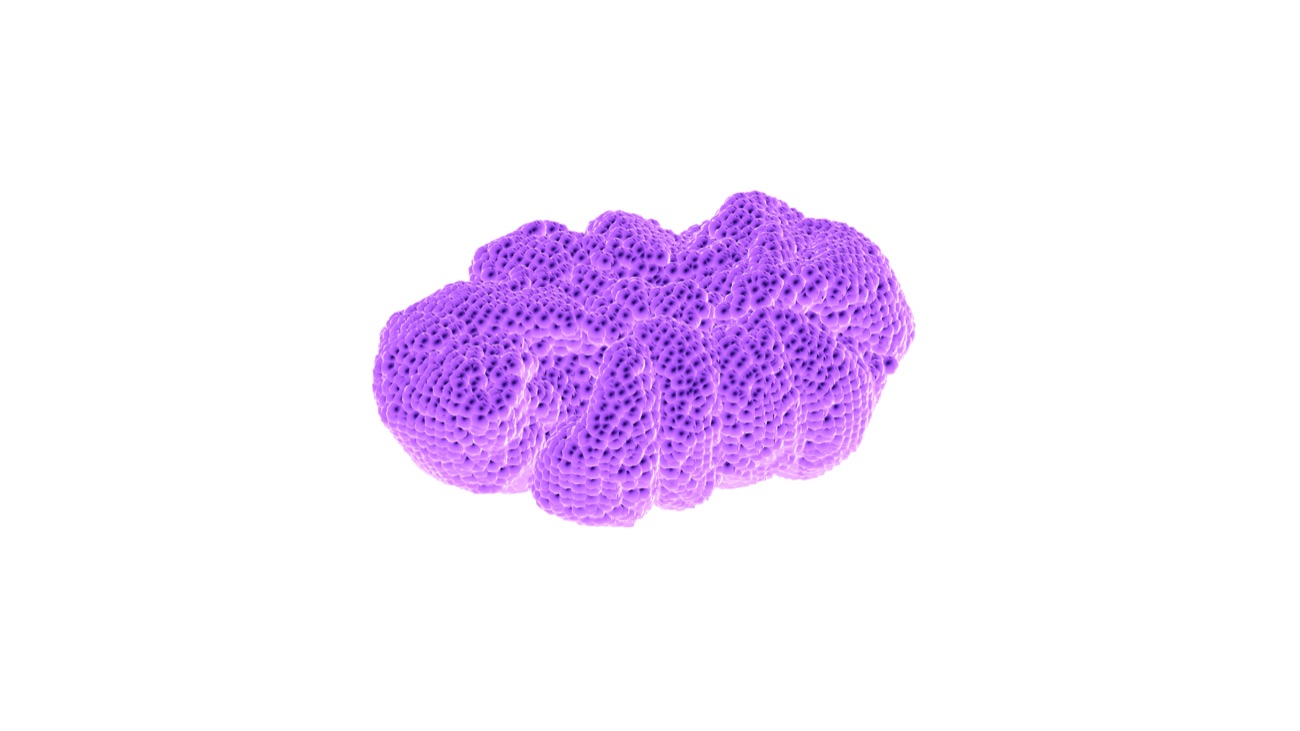
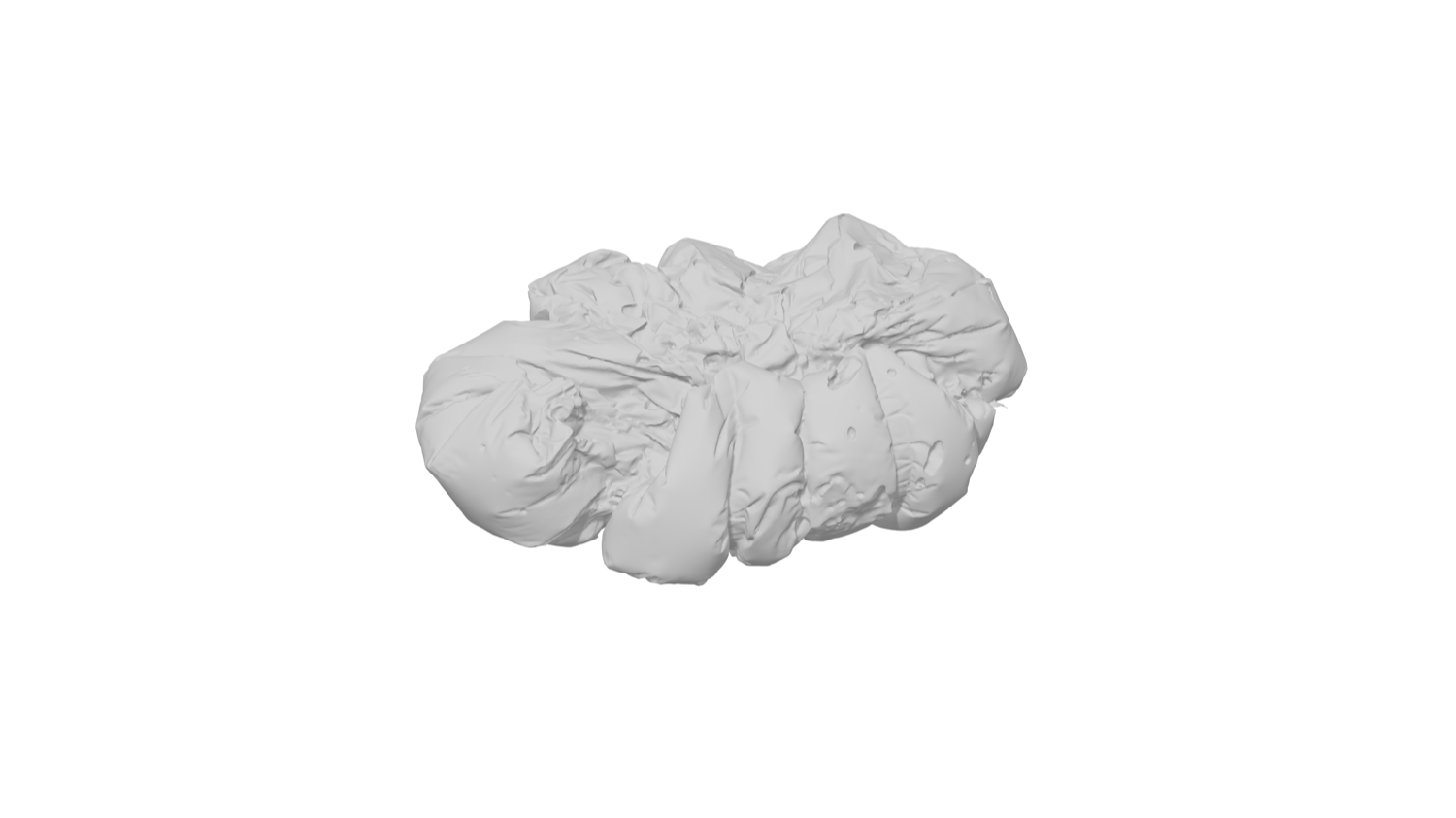
The physical pieces were 3D scanned and imported into Rhino. Using Python scripts, I simplified the point clouds and generated new geometries, sometimes creating spheres or aggregated forms from the scanned data.
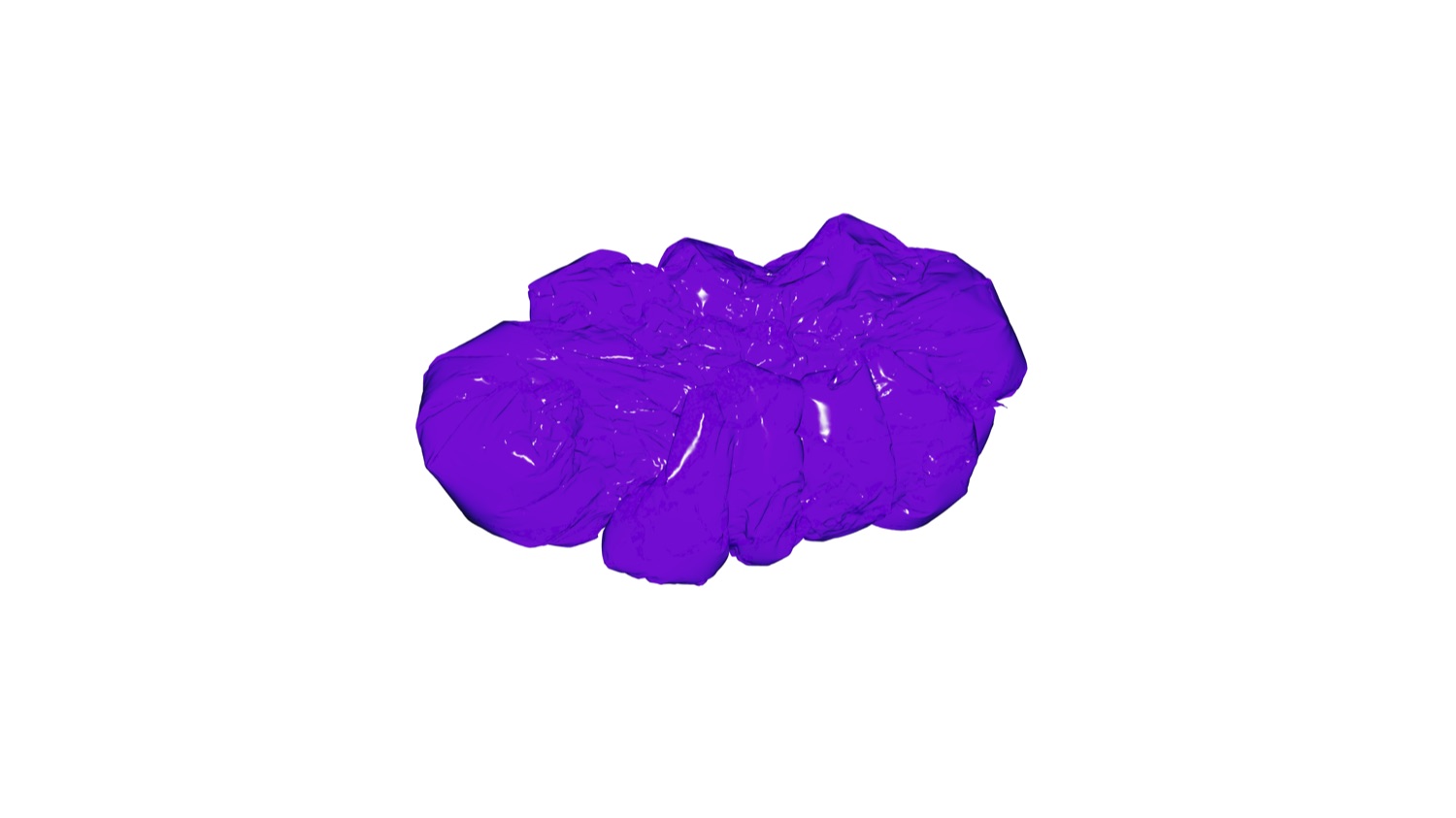
03 — Compressing
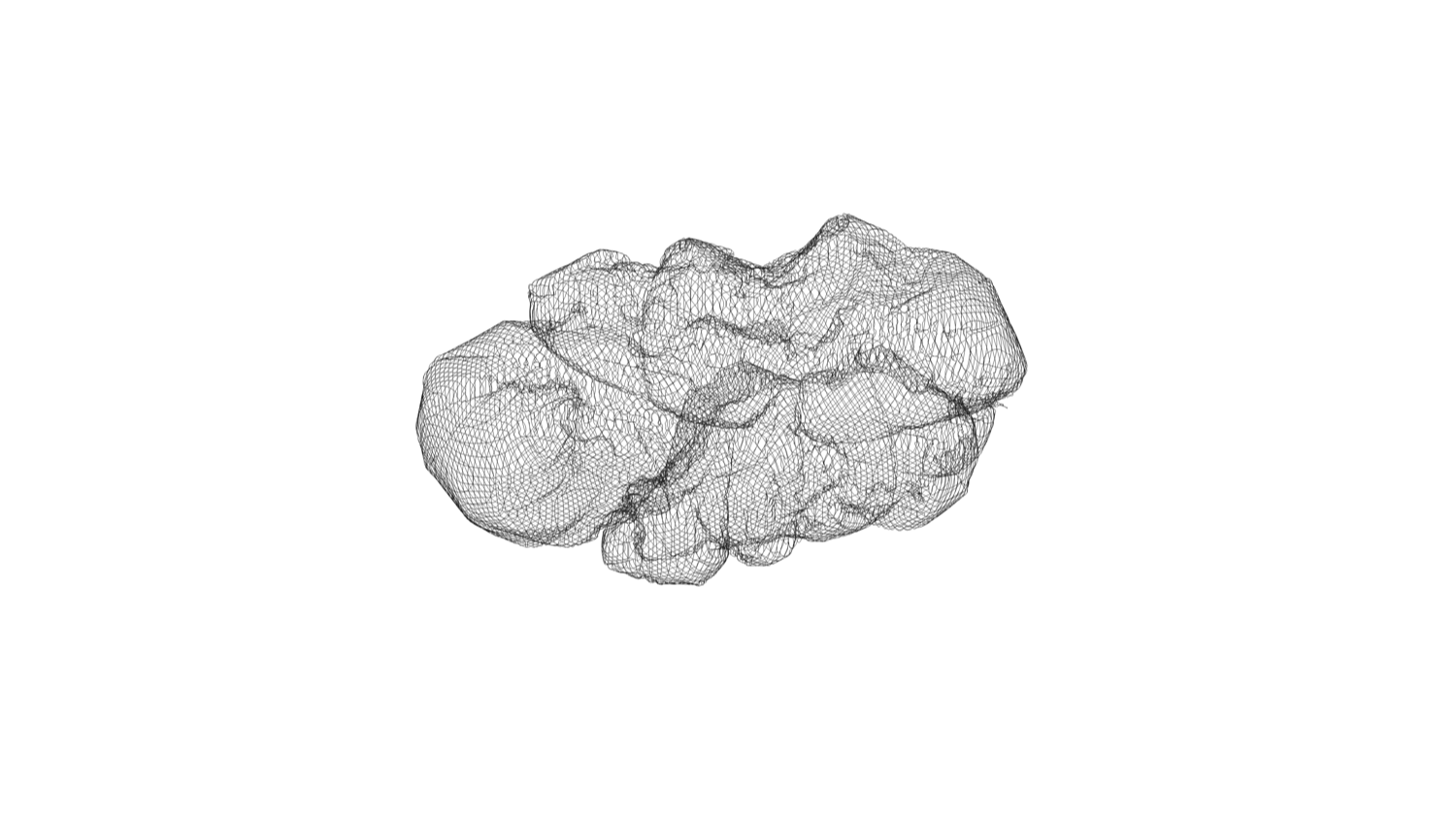
The models were further refined and compressed in Blender to reduce polygon counts and prepare them for real-time interaction on the web.
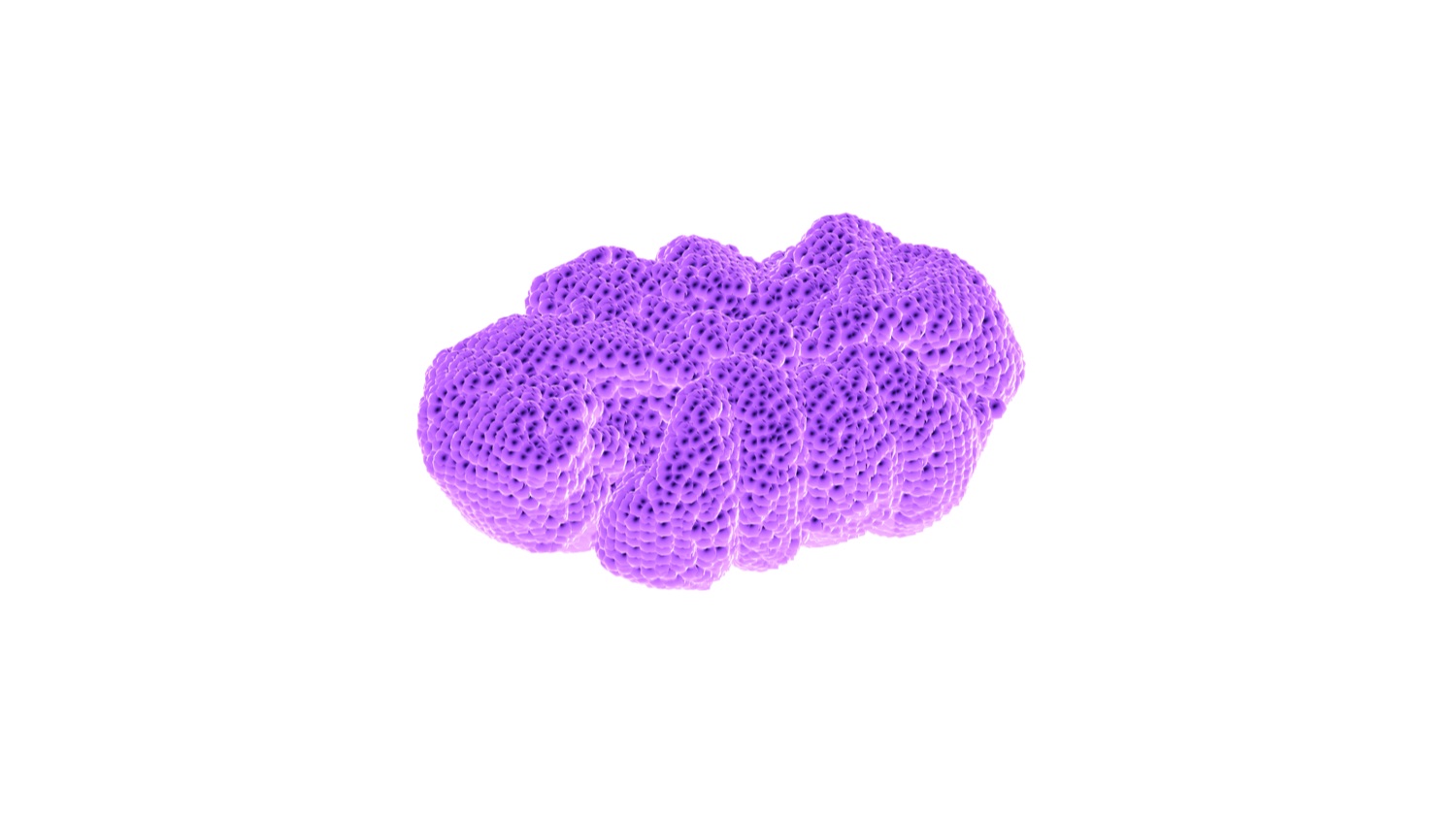
04 — Publishing
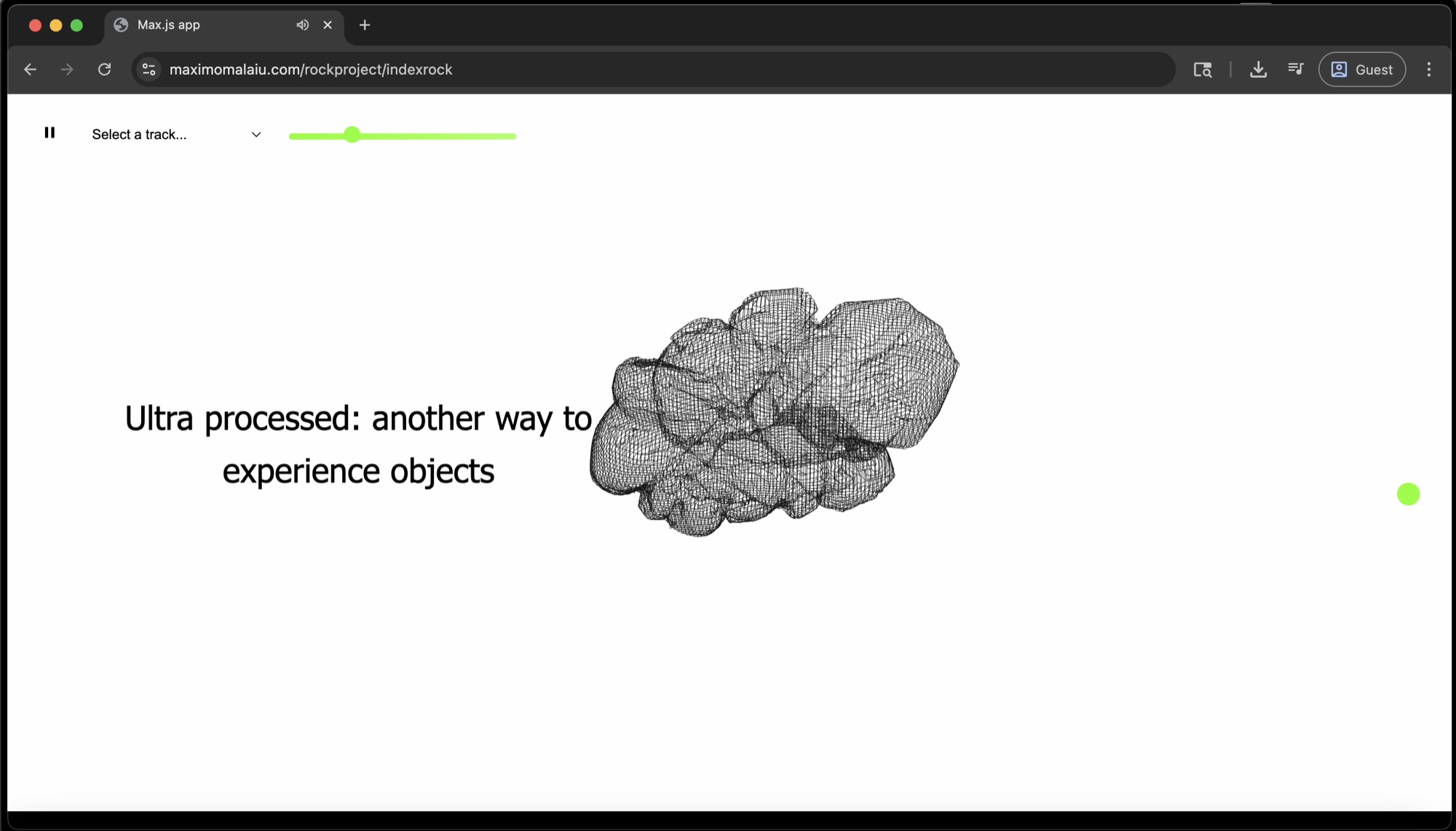
The final result is an interactive webpage built with three.js, HTML and CSS.
The objects rotate and respond to different songs in real time, changing scale and form according to the rhythm of the music.